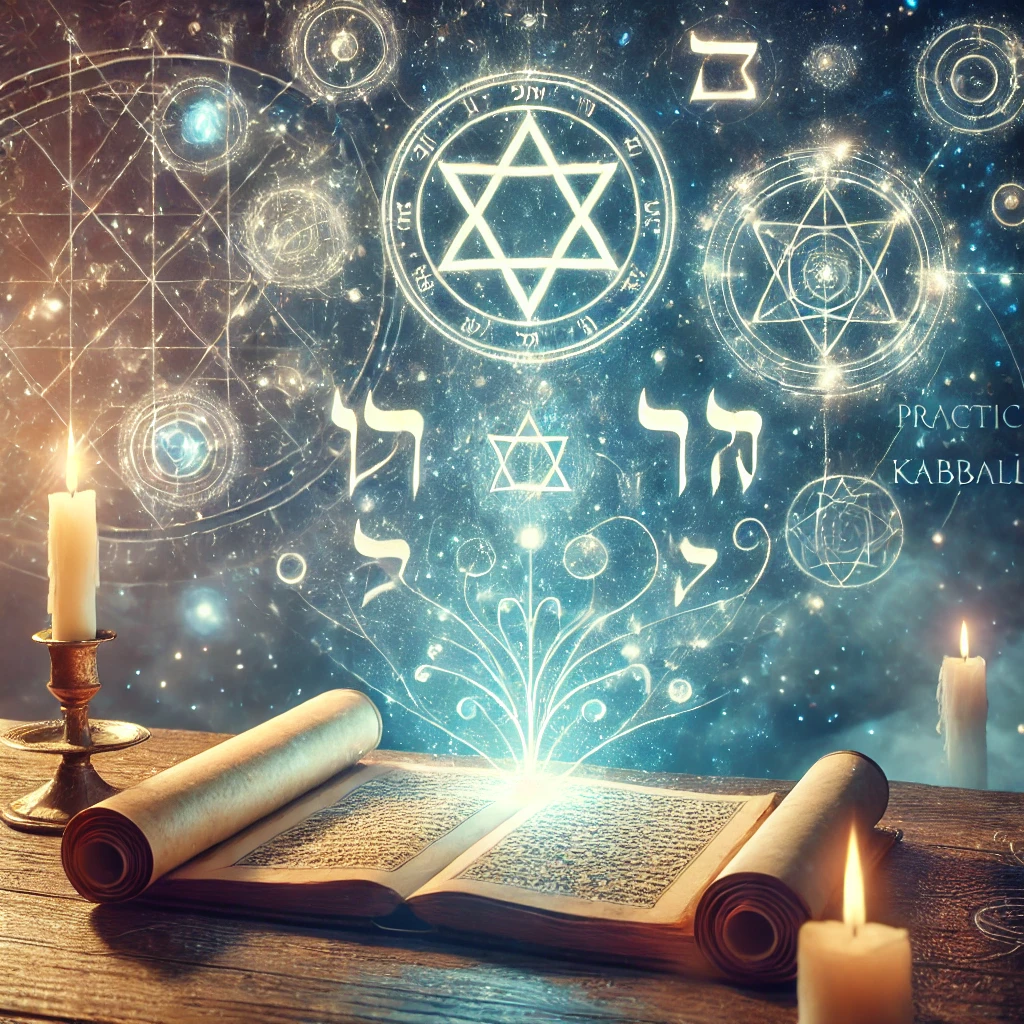
Practical Kabbalah (Kabbalah Ma'asit) is a fascinating and deep branch of the Jewish spiritual tradition, combining mysticism, symbols and complex spiritual techniques. Contrary to common perceptions, Practical Kabbalah is not merely an abstract theory but a practical method for understanding spiritual reality and connecting with higher powers. This article will explore its depths, its essence and the practical aspects of Kabbalah.
What Is Practical Kabbalah?
Practical Kabbalah, also called "applied Kabbalah" or "operative Kabbalah", is a branch of Kabbalah that focuses on the direct application of Kabbalistic principles in daily life. While theoretical Kabbalah deals with a theoretical understanding of the structure of the spiritual universe, Practical Kabbalah places its emphasis on applying concrete spiritual techniques.
Main Goals
- Spiritual connection: creating a direct bond with higher powers and spiritual worlds
- Spiritual rectification (tikkun): improving a person's spiritual and emotional state
- Influencing reality: using spiritual tools to influence what happens in the physical world
Historical Sources
The roots of Practical Kabbalah reach back to ancient times, when the sages of Israel believed in the ability to influence reality through spiritual forces. Concepts of using practical spiritual forces are already mentioned in the period of the Talmud and the Midrashim.
Key Figures
- Rabbi Shimon bar Yochai: author of the Zohar, considered the founder of modern Kabbalah
- The holy Ari (HaAri HaKadosh): Rabbi Isaac Luria, who developed profound methods in Practical Kabbalah
- The Baal Shem Tov: founder of Hasidism, who strengthened the practical dimension of Kabbalah
Key Techniques in Practical Kabbalah
Intentions (Kavanot) and Prayer
One of the central principles in Practical Kabbalah is the use of precise intentions (kavanot) in prayer. It is not merely about saying words, but about a deep inner intention directed toward the higher worlds.
The Components of Intention
- Intention of the heart: inner concentration and emotional depth
- Intention of the mind: precise mental focus
- Intention of the deed: performing actions with a clear spiritual intention
Using Holy Names
In Practical Kabbalah, the Divine names carry deep meaning and spiritual power. The Kabbalists believed that each name has a unique energy and power of influence.
Types of Names
- Explicit names (shemot meforashim)
- Letter combinations
- Names of angels
- Secret names from the Torah
Meditative Techniques
Practical Kabbalah includes advanced meditation techniques:
- Yichudim (unifications): spiritual connection with higher powers
- Tzimtzum (contraction): reducing self-identification and connecting with higher energies
- Breathing meditations: using breathing techniques to reach special states of consciousness
Effects and Purposes
Practical Kabbalah is used for a variety of purposes:
- Spiritual healing
- Influencing luck and destiny
- Spiritual protection
- Solving personal problems
Challenges and Limitations
Despite its power, Practical Kabbalah has clear limitations and rules:
- A requirement of purity in thought and deed
- A prohibition on misusing spiritual forces
- An understanding that spiritual forces are subject to the Divine will
Summary
Practical Kabbalah is a deep spiritual journey that connects the physical and spiritual worlds. It is an ancient and powerful tool that offers a unique way of understanding reality and influencing it, while upholding deep ethical and spiritual principles.
Warning: engaging in Practical Kabbalah requires wisdom, humility, and the guidance of a rabbi, with transmission from mouth to ear (from teacher to student).